
Applications · 5 min read
Backlit fabric vs rigid board for trade-show stands
Exhibition stands ship, build, break down and ship again. The material choice is really a logistics choice.
September 6, 2026
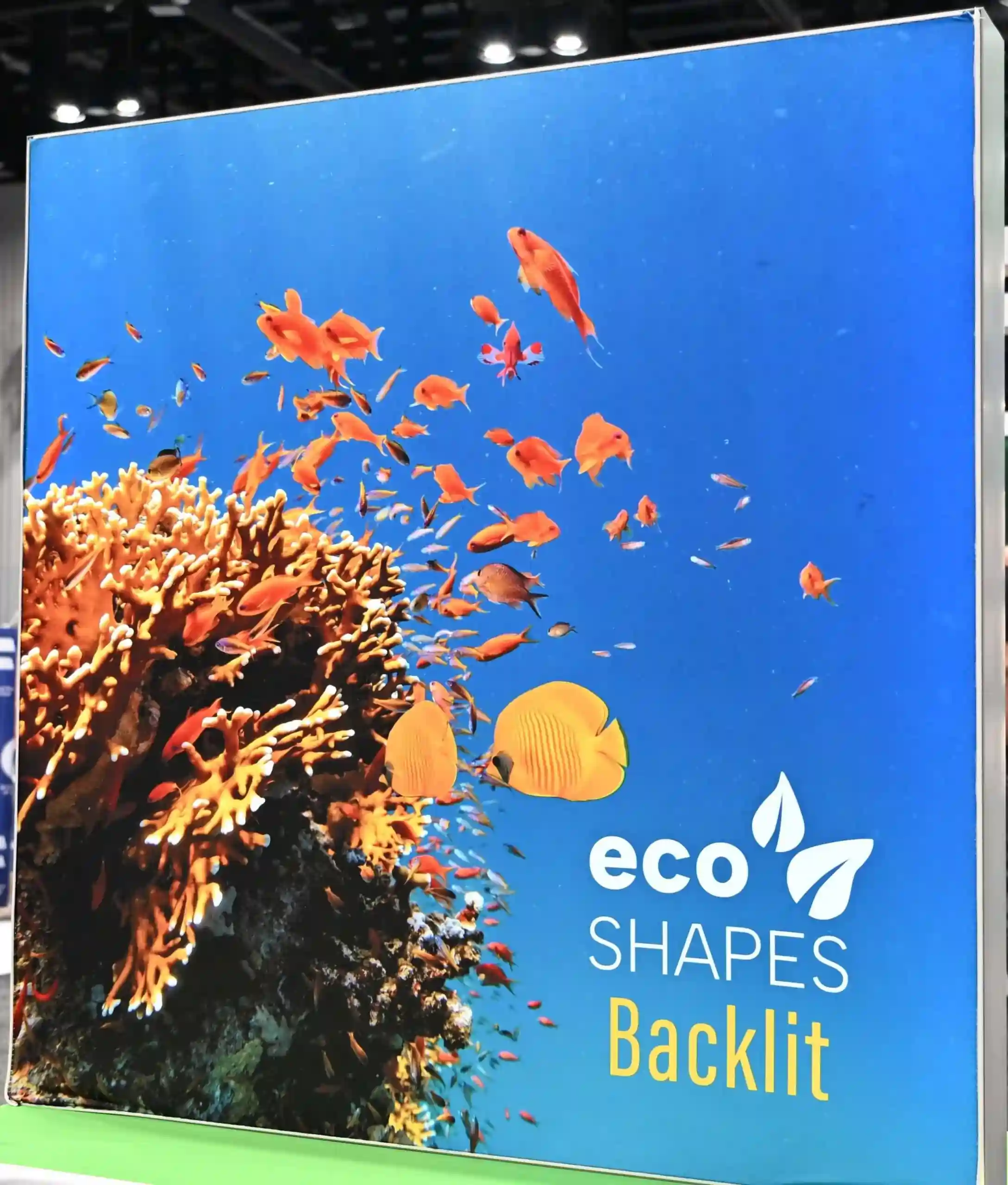
Every trade-show graphic answers to the same three constraints: it has to fly or ship, it has to go up in a few hours, and it has to look new after doing that several times. Fabric and rigid board solve different parts of that.
Where backlit fabric wins
- Large, seamless walls — one printed piece instead of panel joints across a 6-metre run.
- Illuminated features — tension frames with even, glare-free light through the graphic.
- Reuse across a season — fabric folds into a case, ships as luggage, and comes out of the bag ready with a gentle steam.
- Weight-sensitive rigging and hanging signs.
Where rigid board wins
- Counters, plinths, header panels and anything that must stay flat and self-supporting.
- Crisp edges, cut shapes and precise type at close viewing distance.
- Short-life, high-impact structures that will be recycled rather than stored.
- Flatbed printing straight to the sheet, with no finishing beyond the cut.
How they combine on one stand
The pattern that works: fabric for the big vertical surfaces and anything lit, board for everything you touch or lean on. Both are available PVC-free, so the whole stand can be specified without a chlorinated plastic in it — which matters increasingly for exhibitors reporting on event waste.
Two practical notes
Fabric hides a slightly imperfect frame; board reveals a slightly imperfect cut. And whatever you specify, print one panel and view it at the real distance under real exhibition lighting before the full set goes down.