Print · 6 min read
Printing PVC-free media on latex, UV and solvent presses
PVC-free media runs on all the current wide-format ink technologies. Each one asks for something slightly different.
August 25, 2026
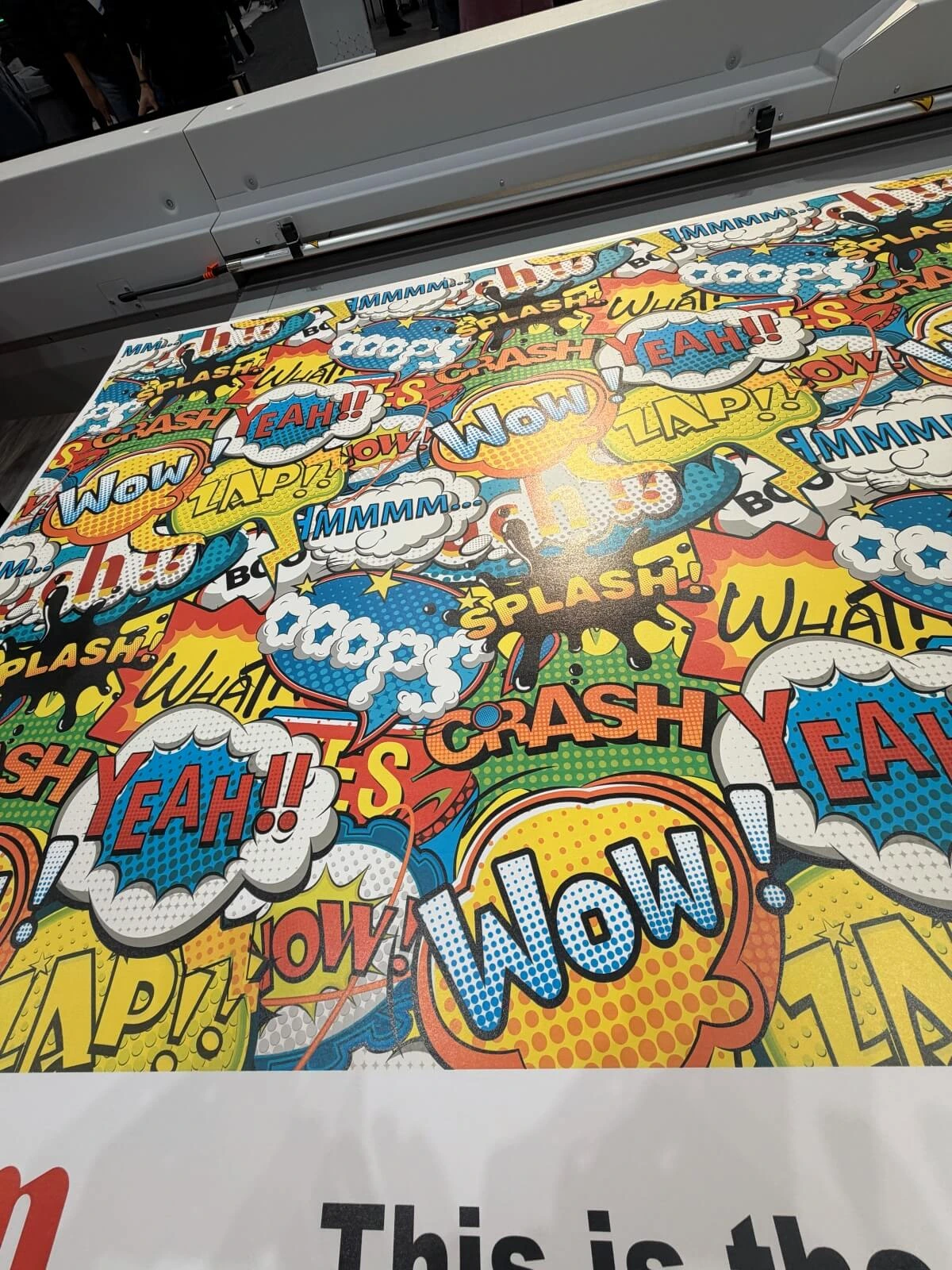
Our media is designed to be printable with the current generation of eco-friendly inks and digital imaging processes. That is deliberately broad, because most print providers do not get to choose their press per job. Here is how the three common families behave.
Latex
Water-based, heat-cured, and the most common choice for interior wallcovering work because the finished graphic has little odour and can usually be installed almost immediately. The variable to watch is heat: paper-based substrates carry moisture, and pushing cure temperature harder than necessary is the usual cause of cockling or a slight curl at the leading edge. Start at the media's recommended profile rather than at your vinyl profile.
UV — flatbed and roll-to-roll
Cured by light rather than heat, so the substrate stays cool and dimensionally calm. Excellent for rigid display board and for poster work. Because UV ink sits on the surface as a cured film, think about flexibility: a heavily inked UV graphic on a sheet that then has to be rolled or wrapped around a corner needs a test piece first.
Solvent and eco-solvent
The ink carrier softens the receiving layer and the colour keys in as it dries. Robust and long-established. On PVC-free coated papers, allow proper outgassing before laminating or rolling — trapped carrier is what causes tacky surfaces and adhesion failures later. For indoor projects where air quality is specified, check the ink alongside the media rather than assuming the substrate settles the question.
Test before the production run
- Print a strip with your normal profile and one step down in ink limit — PVC-free coatings often need less ink than vinyl for the same density.
- Check dry-down after 24 hours, not after ten minutes.
- If you laminate, laminate the test strip too. Most surprises appear at that stage.
- Keep the strip. It becomes your internal reference for the next job.
Ask us for samples and run this test on your own press. It takes an hour and removes every argument later.